Domain Value: How Much Is an Expired Domain Worth?
A drop has two prices: the name and its links with history. In 1.3 million expired auctions, 95% of names valued at $1,000+ got no bids, while drops with real links drew bids six times more often. How to value a domain, vet it before bidding and 301 redirect it the right way
 DeepScan.pro
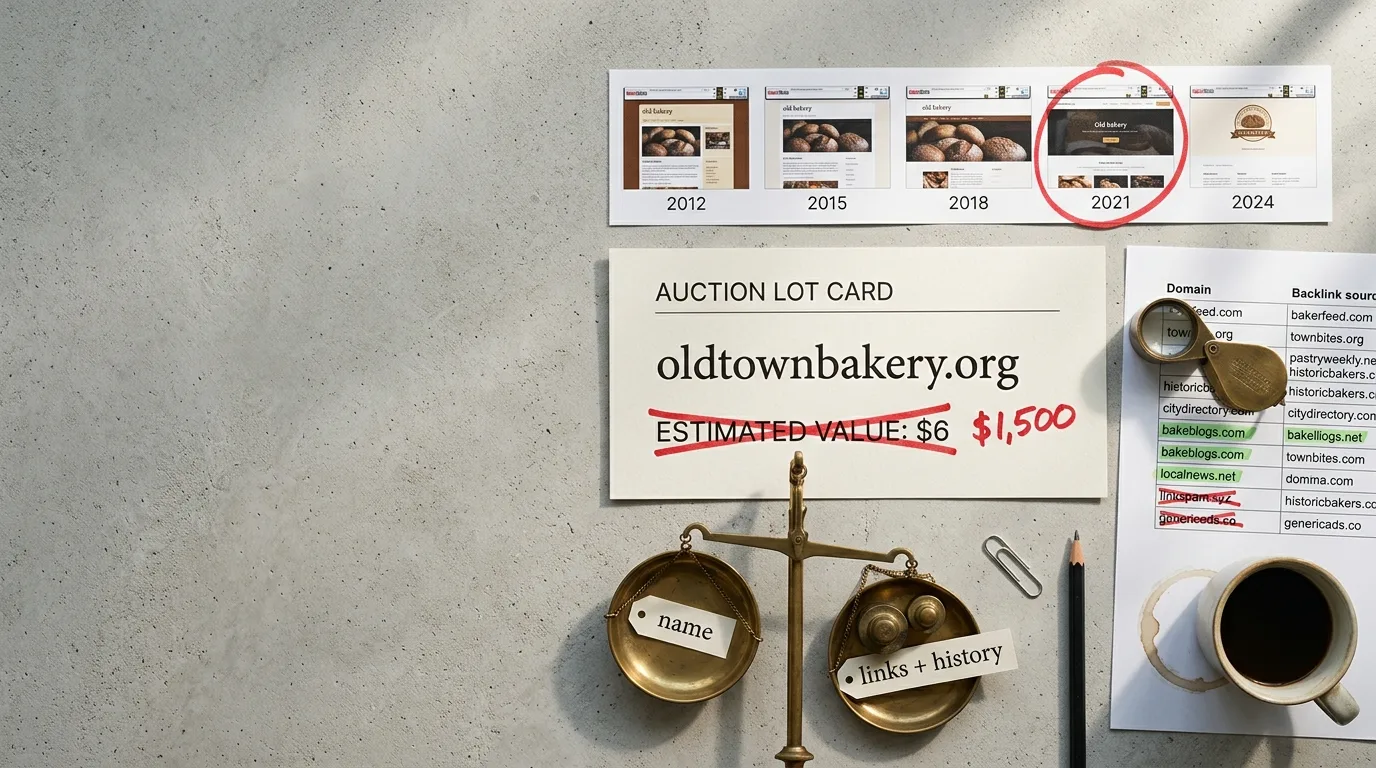
"How much is my domain worth?" is the question I hear most often, and the honest answer is that a name has at least two prices. The first is what an end buyer would pay for the name itself. The second is what its links and history are worth to someone who ranks sites. Registrar tools only see the first one, and link buyers pay for the second. That's why the same drop can be valued at $6 and still sell for $1,500.
This guide shows how I evaluate a drop before bidding: where free estimates help, which signals actually move the price, how to check the history, and how to turn all of it into a maximum bid.
The numbers come from two sources. The first is our own tracking at DeepScan: about 1.3 million expired auctions that ended on the largest platform between September 26 and October 17, 2026. Prices are the last bid we recorded, usually a few hours before the close, so real final prices can be a bit higher. The second is public sales reported by Domain Name Wire in 2026.
Two Prices for One Domain Name
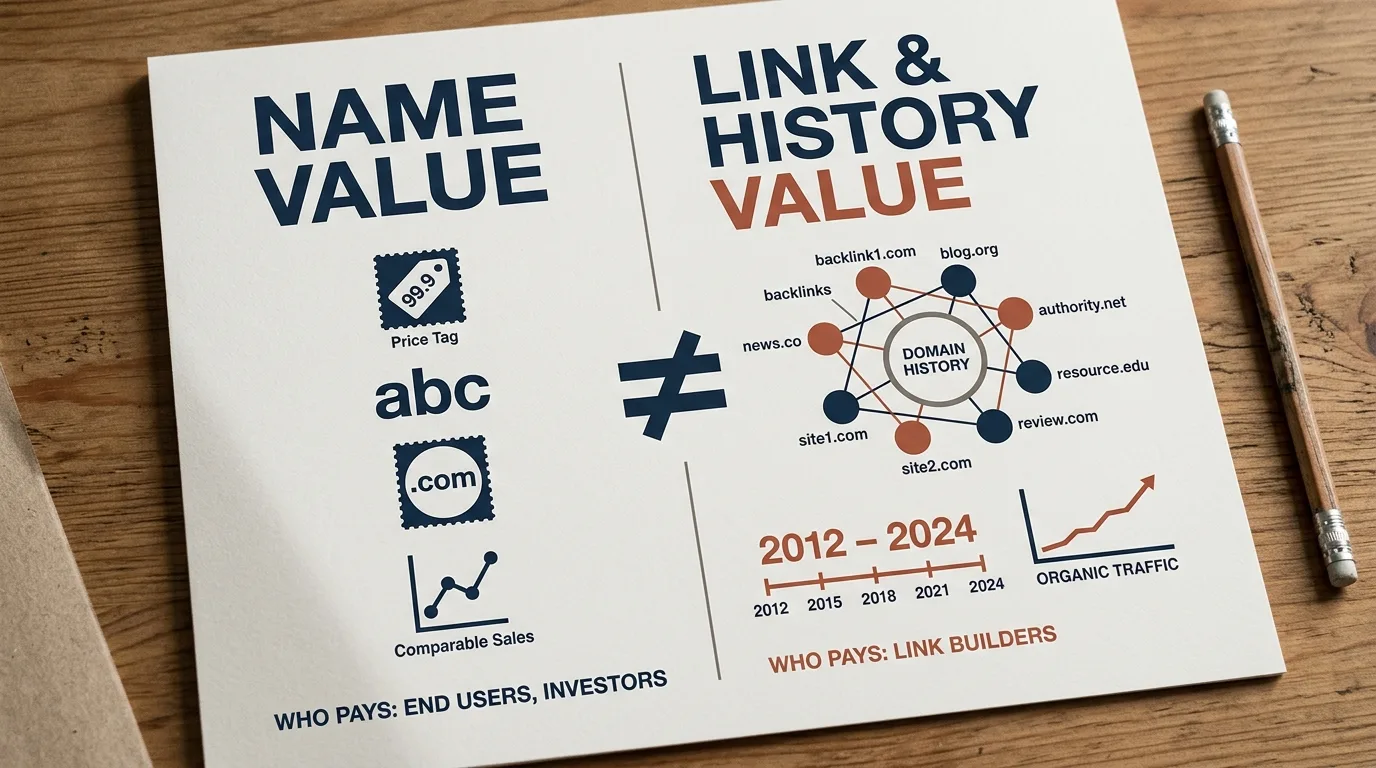
Name value is the price of the name as a brand: length, real words, the zone, how many similar names are taken in other zones, comparable sales. End users pay it when they need exactly this name for a business. Domain investors pay a small part of it, because they will hold the name for years before someone asks.
SEO value is the price of what the old site left behind: referring domains, anchors, pages that still get links, organic traffic, a clean history. PBN builders (a PBN is a private network of your own sites that link to a main site), link builders and people who buy expired domain names for redirects pay it. They don't care whether the name is pretty.
| Name value | Link and history value | |
|---|---|---|
| What sets it | Length, words, zone, comparable sales | Live links, topic, history, traffic |
| Who pays | End users, domain investors | PBN and link builders |
| Free estimate | Automated valuation tools | None, you check it yourself |
| Typical mistake | Taking the estimate as a price | Taking the link count as quality |
Two public sales from 2026 show the difference well. boltz.com went for $105,000 with a weak link score (DR 14 on a 0–100 scale) and zero ranking keywords: that was pure name value. NICTUSA.com sold for $15,501 with DR 60 and also zero keywords: that was pure links.
There is also a gap inside name value itself: the intrinsic value of a name to an end user and its resale price between investors often differ ten times or more. MakeMatter.com was bought at a domain auction for $847 in 2022 and later sold for $15,000. That is the normal math of domain investing: a passive portfolio that sells 1–2% of its names a year is considered healthy, so every sale has to pay for dozens of renewals.
Decide which of the two prices you are paying before you look at any number. An investor and a PBN builder can bid on the same name, but they are not buying the same thing.
Is GoDaddy Domain Appraisal Accurate?
Most people start with the domain value appraisal GoDaddy gives away for free, called GoValue. It's a machine learning model trained on sales data. In August 2026 the model was rebuilt from scratch: it now uses a language model to judge how brandable a name is, and the cap went up from $25,000 to $1 million. New values show up in domain search first. Auction listings, the API and bulk checks get the update in Q4 2026, so for a while the same name can show different numbers in different places.
What it doesn't see matters more. From the start, the tool was described as predicting "the sale price of the URL", not the website behind it. Backlinks, traffic and history are not part of the estimate, and no link metric goes into it.
How close does it get? In May and June 2026, Domain Name Wire tested 15 automated tools on real sales. The verdict on GoValue: it is "probably on the low side" on exact prices, but it "quickly separates stronger domains from weaker ones". Atom came out as the best tool overall. And the tools disagree wildly: kickers.ai, sold for $8,000, got estimates from $171 to $34,000.
Our own data says the same thing in numbers:
- About 145,000 lots in our sample were estimated at $1,000 or more. 95% of them ended without a single bid.
- Lots that got no bids had a median estimate of $16. Lots that got bids had a median of $784. So the score does sort names well.
- The 254 lots estimated at $5,000+ drew bids 98% of the time, but the median last bid was about 4.5% of the estimate.
- For short brand names it can be close: a five-letter brand .com estimated at $16,262 closed at $15,250.
So, as a sorter it works, as a price it doesn't. For drops bought for links it's even further off, because it can't see the one thing those buyers pay for.
Sort a long list by the free estimate, cut the bottom half, and do the manual check only on the top. It saves hours. Just never use the number as your bid. And when a seller sends you a screenshot of a big estimate, ask for comparable sales: after the August update, the median estimate in one investor's test of 40 names grew more than 11 times.
Valuation Tools Compared: What Each One Sees
| Tool | Price | What it looks at | Where it helps |
|---|---|---|---|
| GoValue | Free, with a daily limit | Name, words, zone, market trends | Sorting long lists |
| Estibot | Paid plans | Name, comparable sales, ad data | Keyword names |
| HumbleWorth | Free | Name; gives three ranges, from a quick sale to a broker price | Wholesale vs retail |
| Atom | Free | Name, comparable sales, how well the keyword sells | Best overall in the 2026 test |
| Sedo | $99 per report, 5 business days | Expert review of the name | A document for a buyer |
| NameBio | Free search | 7.3 million recorded sales | Finding real comps |
| DeepScan | Free catalog, paid checks | History by year, link scores, spam signals | The side the others skip |
None of the classic estimators look at links or history. That's the gap we built deepscan.pro for: the catalog lets you find and buy expired domains from dozens of auction sites, with the site history by year, link scores and spam signals next to each lot.
What Sets the SEO Value of an Expired Domain
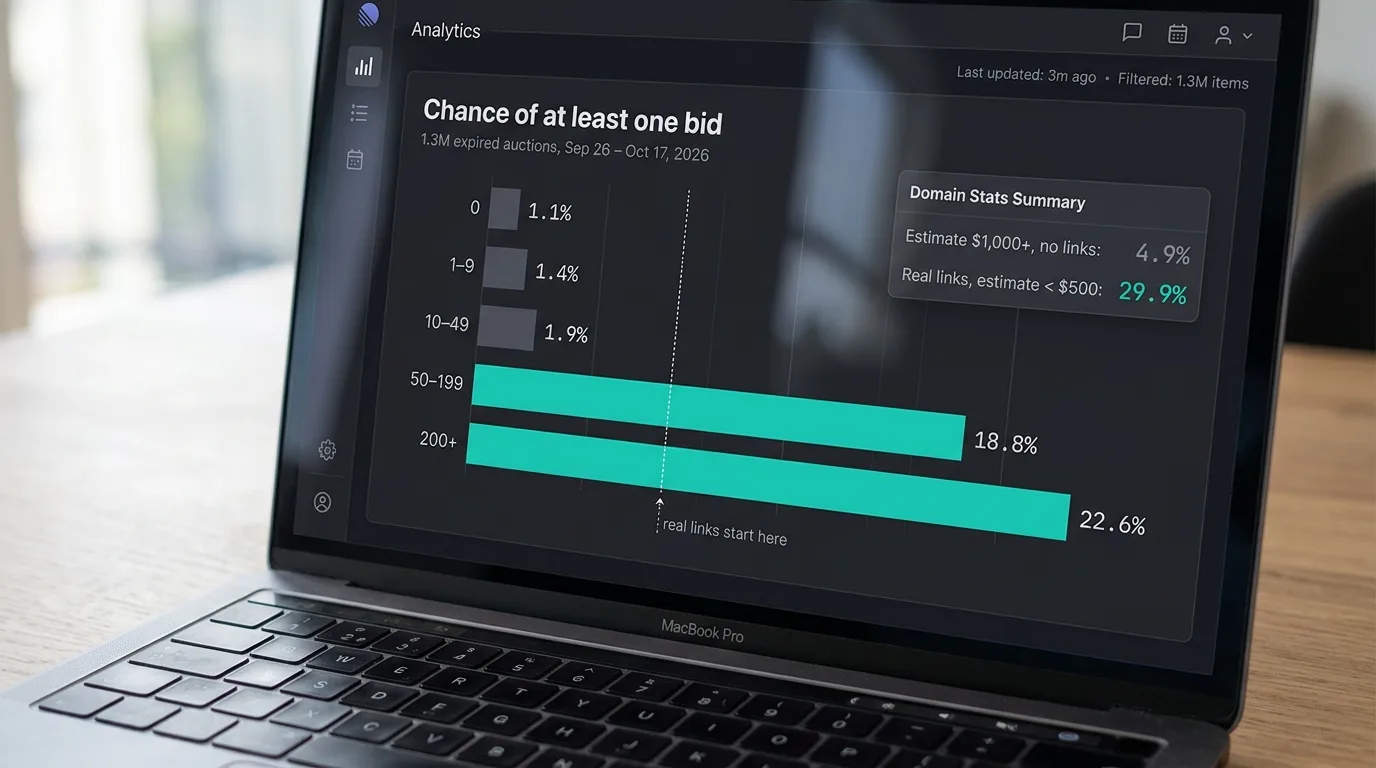
Here is what bidders actually reacted to on the largest platform. Referring domains below are counted in a strict link index, and "real links" means 50+ of them plus a Trust Flow (a 0–100 link quality score) of 10 or more.
| What the lot had | Lots | Got at least one bid |
|---|---|---|
| No referring domains | 1,197,826 | 1.1% |
| 10–49 referring domains | 54,225 | 1.9% |
| 50–199 referring domains | 2,440 | 18.8% |
| 200+ referring domains | 912 | 22.6% |
| Trust Flow 20+ | 432 | 26.4% |
| Real links, estimate under $500 | 388 | 29.9% |
| Estimate $1,000+, under 10 referring domains | 132,012 | 4.9% |
Lots with real links and a low estimate drew bids six times more often than "valuable" names with no links. Domains with strong backlink profiles get bid up, whatever the estimate says. Some examples from the same weeks: a .co about cyber defense with 620+ referring domains, valued at $6, closed at $1,500. A four-letter .org that used to belong to a professional association, with about 780 referring domains, was valued at $1,180 and went for $7,600.
What drives the price, in order of weight:
- Referring domains you can verify. A referring domain is a separate site that links to the name; backlinks are the individual links, and one site can give hundreds of them. The count shown in a lot feed is mostly noise. In the same feed, one popular link index gave the median lot 169 referring domains, while a stricter index gave it zero: 84% of lots "had" 100+ in the first one and only 0.18% in the second. Directory clones, WHOIS copies and "site worth" calculators link to almost all registered domains. Open the list and count only real sites.
- Topic match. Links from sites on the topic of your future project, with brand, URL or topic anchors. A clean drop about fishing is worth little to a finance site.
- Links with traffic. A link from a page people visit still passes value. Score alone doesn't. In the words of the Domain Name Wire review: "A great link profile with no traffic isn't worth much."
- History. The same topic for years, no spam in the last two or three years before the drop, no long parking periods, few or no repeat drops.
- Organic traffic that is still there. Rare and valuable, but check that it isn't a spike after a new owner (more on that below).
- Domain age. Google's John Mueller put it plainly: "domain age helps nothing". An aged domain costs more only because older domains had time to collect links. If you buy before the drop, while the name is still up for bidding, the original domain registration date stays. A dropped domain that someone registers again gets a new date, but the links stay the same.
High domain authority on its own means little. SEO metrics like DR or DA are easy to inflate with spam backlinks, so treat them as a reason to look, not as a reason to pay. What you pay for is a clean backlink profile: real sites, on topic, still online.
A sharp traffic jump after a change of owner is a warning, not a bonus. MandesRestaurant.com sold for $3,986 in summer 2026, got casino pages on subdomains and peaked at about 590,000 estimated monthly visits. Weeks later it was down to about 1,300. Don't pay for that kind of existing traffic.
How to Evaluate an Expired Domain Name
This is the formula I use. It's simple on purpose: the goal is a firm maximum bid, not a perfect number.
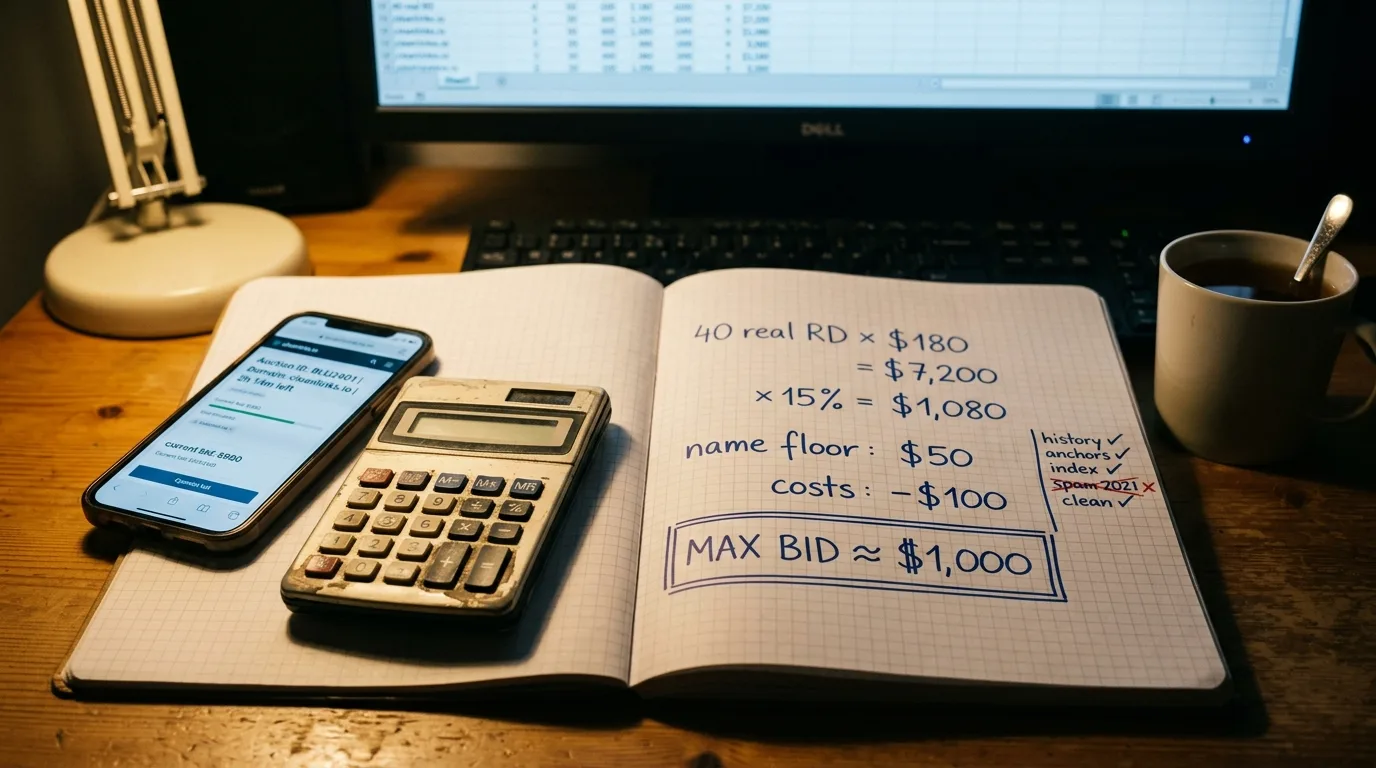
- Name floor. Take the free estimates and real comparable sales, then use the lower "quick sale" range. That's what investors would pay you back if your link plan fails. For most drops it's close to zero, and that's normal.
- Link replacement cost. Count only live, on-topic referring domains from real sites with traffic. Multiply by what such a link costs today. BuzzStream's 2026 data puts a guest post at $295 on average when you buy direct ($461 through an agency) and a link insertion at $179.
- Risk discount. Links on a drop are not guaranteed. Since 2022, Google's link spam systems can simply cancel the "credit passed by these unnatural links". I pay 10–20% of the replacement cost for a clean drop and nothing for one with spam in its history. That's my rule, not a law, but it has kept me out of most bad deals.
- Ownership. Registering a domain or keeping a .com isn't free: the wholesale .com price rises from $10.26 to $10.97 on November 1, 2026, plus a $0.20 ICANN fee, and retail is higher. Add hosting, content and your time.
Example. 40 real, on-topic referring domains × $180 = $7,200 to replace. 15% of that is $1,080. The name floor is only $50, so the link value is the one that counts. Minus about $100 for the first year of costs, my maximum bid is just under $1,000, and I write it down before bidding starts.
Take the bigger of the two values, not the sum. The potential value of a drop depends on how you'll use it: a PBN buyer won't pay extra for a nice name, and an end user won't pay extra for links.
How to Vet Expired Domains Before You Bid
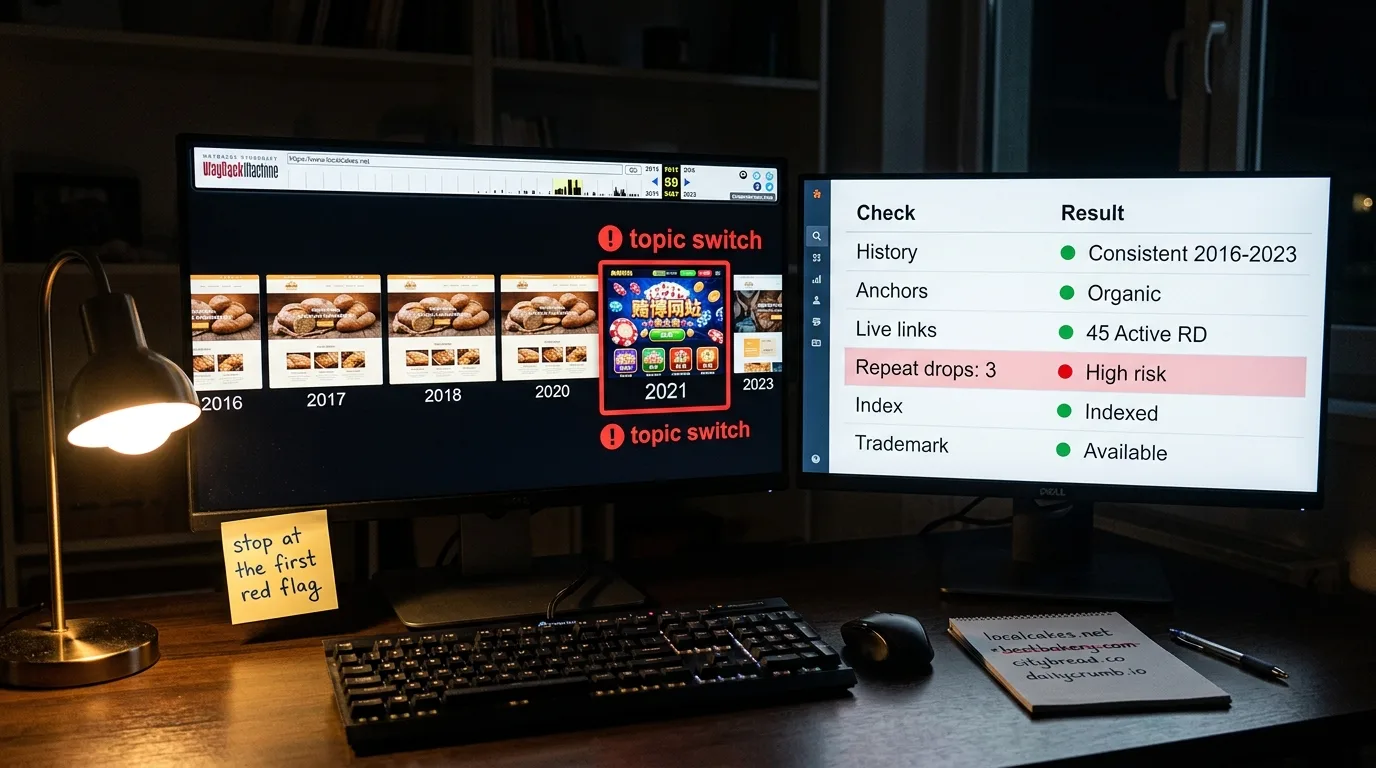
If you google "how to check expired domain before buying", you get a list of twenty tools. The order matters more than the tools. I go from the cheapest check to the most expensive and stop at the first red flag:
- History by year. Look at a snapshot for every year, not just the last one. You can find domain history in the web archive or in a lot card. Red flags: casino, pharma or adult pages, Japanese or Chinese pages on an English site, a sudden switch of language, years of parking, very few snapshots.
- Anchors. Brand, URL and topic words are fine. Money anchors, especially in other languages, mean someone has already used the name.
- Live links and lost pages. Which linking sites still exist, which of them get traffic, and which old URLs now return 404. Those pages are what you'll rebuild or redirect. A Trust Flow to Citation Flow ratio close to 1 looks healthy; around 0.15 usually means spam.
- Repeat drops. A fresh creation date with years of old sites in the archive means the name was dropped and caught again, maybe several times. Each new owner could have been a spammer.
- Index and brand search. Run a site: search and search for the old brand name. If the old site didn't rank even for its own name, a filter may still be there. Mueller in September 2025: "Sometimes it just takes a lot of time for the old state of a domain to be shaken off."
- Outbound links in the archive. If the old site sold links (a sidebar of random links, a page of paid posts), its own links are probably already discounted.
- Who redirects to it. Check which domains already point a 301 at this name. Incoming redirects bring links you won't see in the usual list, and they can also show that the name is part of someone's redirect chain.
- Trademark and blacklists. A quick check in USPTO and WIPO, plus Safe Browsing. A brand name invites a UDRP complaint (the fast dispute process brand owners use to take names back), and a big company won't mind paying the $1,500+ filing fee.
Avoid domains that fail checks 1, 4 or 5. No price makes them a good deal.
How to 301 Redirect an Expired Domain
A redirect is where most of the money on drops is made or lost. This is the order I follow:
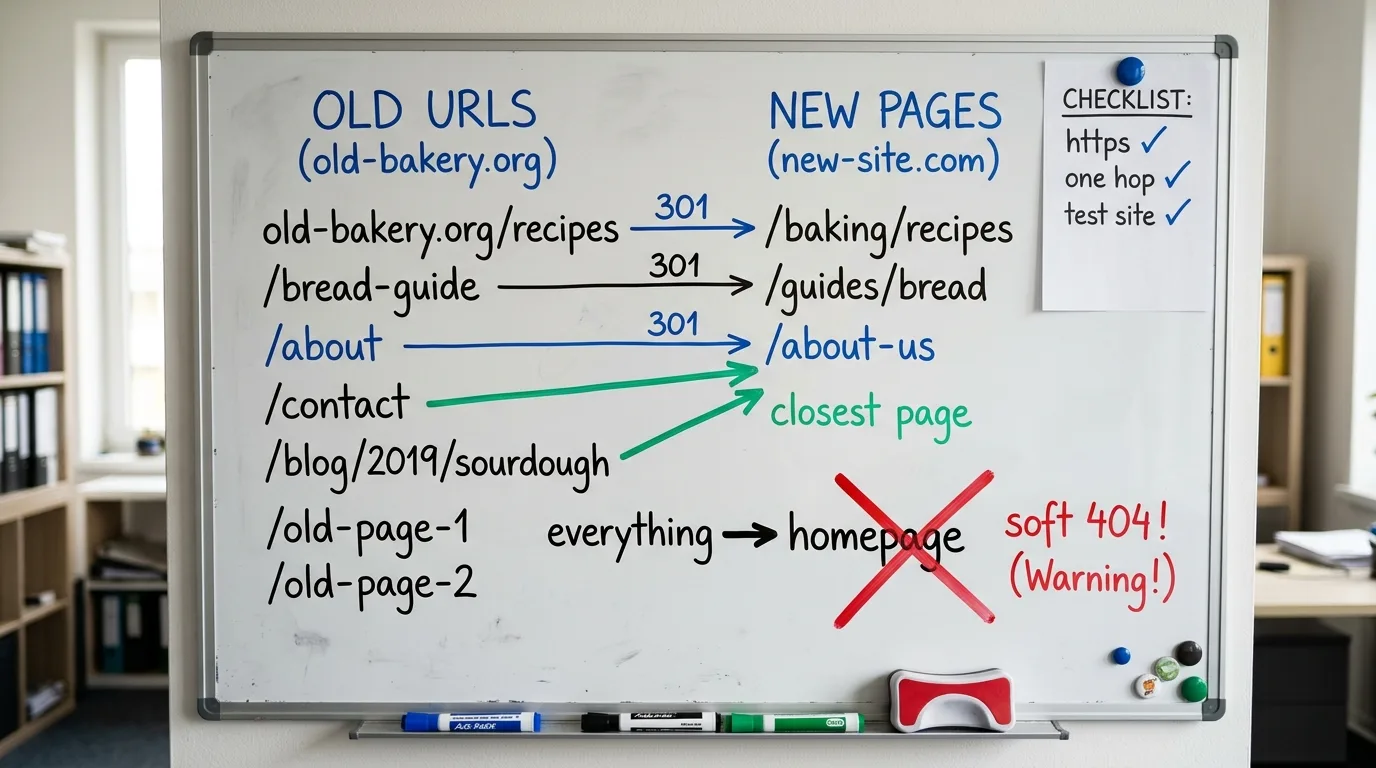
- Get https working first. Check the name at hstspreload.org. If the old owner added it to the HSTS preload list, browsers will only open it over https, so old links fail without a valid certificate. Removal from that list takes months.
- Map pages, not the whole domain. Export the old URLs that have links. Usually 10–20 of them carry most of the value. Redirect each one to the closest page on your site and the rest to the closest category. Google's own guide says a mass redirect to an irrelevant page such as the homepage "might be treated as a soft 404".
- One hop only. Chains like http → https → www → new domain waste value. Point every old URL straight to the final https address.
- Use simple tools. A few lines in .htaccess or nginx are enough. On Cloudflare, Bulk Redirects cover up to 10,000 URLs on the free plan, but rules are static (no regex) and the DNS record must be proxied.
- Test before you redirect. Restore the old site from the archive, wait for indexing, and watch impressions in Search Console for a few weeks. If impressions stay flat, the name is filtered, and you've just saved your money site.
- Spread it out and keep it. One known approach is three to five redirects over about two months, starting five or six months after the main site launches. Keep redirects for at least a year: that's how long Google says to hold them during a site move.
Remember what Google thinks of the lazy version. Mueller about redirecting an unrelated old site: "Sure a 301 works, but you're not moving content… It's not a move." Relevance decides whether anything passes.
White, Grey and Black Ways to Use Expired Domains
White. Rebuild the same project. rew-online.com sold for $41,501 in March 2026, and the buyer brought back the old real estate news site. Another quiet trick: write to the sites that still link to the old pages and offer them a working page on the same topic. Many will update the link.
Grey. A PBN or redirects for SEO purposes. It works when the topic matches, the sites look alive and they don't share hosting, templates or owners. Price these drops strictly by the formula above.
Black, and only with care. Casino or affiliate pages on old charity and school names. A 2026 audit by Backlinking.com looked at 3,692 drops sold for over $3,000 from January 2024 to May 2026: 448 of them became gambling sites. afropunk.com, with links from Forbes, the New York Times and CNN, sold for $9,250 and now redirects to a casino. This is exactly what Google's "expired domain abuse" policy describes: a name bought "primarily to manipulate search rankings" with content of "little to no value". Such sites live for weeks, so pay only what a few weeks of traffic can return, and keep them far away from your main projects.
The old online presence of a name is not yours. Old emails, password resets and customer data that arrive on a bought name must not be used. That's a legal problem, not an SEO one.
Where to Find Expired Domains for Sale
Domain names expire every day, and many domain owners simply forget to pay. When a domain expires, the owner gets a grace period to renew the domain. On the largest platform, GoDaddy Auctions, the name goes up for bidding around day 26 after the expiration date. If nobody buys it, the name goes back to the registry and, after about five more weeks, becomes a deleted domain. Only then can it become available to everyone. Competition is real: in the first half of 2026, about 65,000 dropped names were registered again every day.
Expired Domain Auctions and Closeouts
Registrar auctions have the biggest lists. Since about 99% of lots get no bid at all, the cheap hunting ground is the closeout after bidding ends: a fixed-price sale of unsold names, where prices fall to as little as $5.
Backorder Before It Becomes a Deleted Domain
You place a backorder at DropCatch, SnapNames or NameJet to catch a name at the moment of deletion. If several people order it, there's a short auction between them.
Domain Marketplace and Brokers
Hand-picked aged names on sites like ODYS cost from $300 into the millions, and domain brokers handle the premium end. You pay for the selection and the checking.
One Search Across Auction Platforms
Instead of watching ten sites, use one search across all of them. Lists of available domains help you find expiring names a week or two before expiry, which is when the research should start: once names expire and go up for sale, you have days, not weeks.
Valuable domains rarely look valuable in a list. The few valuable expired domains in a feed of thousands are the ones with real, on-topic links and a clean past, and the only way to find them is to check.
Before Buying an Expired Domain: Key Points
- A name has two prices: the name and the links with history. Free estimates only see the first.
- Use estimates to sort a list, never as a bid.
- Count real, on-topic referring domains with traffic, not the number in the feed.
- The value of a domain for links = replacement cost × a risk discount, minus your costs.
- Check history, repeat drops and the index before money moves, and redirect page by page.
Good drops are valuable digital assets, but only for a buyer with a plan for them. Any recently expired domain can look like a deal. Purchasing expired domains without the checks above is how most domain acquisition budgets get burned. Winning a drop is easy; using it well is the job.
Comments
Sign in to leave a comment
No comments yet — be the first.