Domain Rating vs Domain Authority: SEO Impact and Ranking Differences
Domain Rating vs Domain Authority: what to trust on expired domains DR and DA are not the same metric. One measures link strength, the other predicts ranking ability. Google uses neither. How to read the DR/DA gap, what changed after Ahrefs’ Sept 2025 reset, a pre-buy checklist for drops, and what still works in 2026 — white, grey, and black. No fluff.
 DeepScan.pro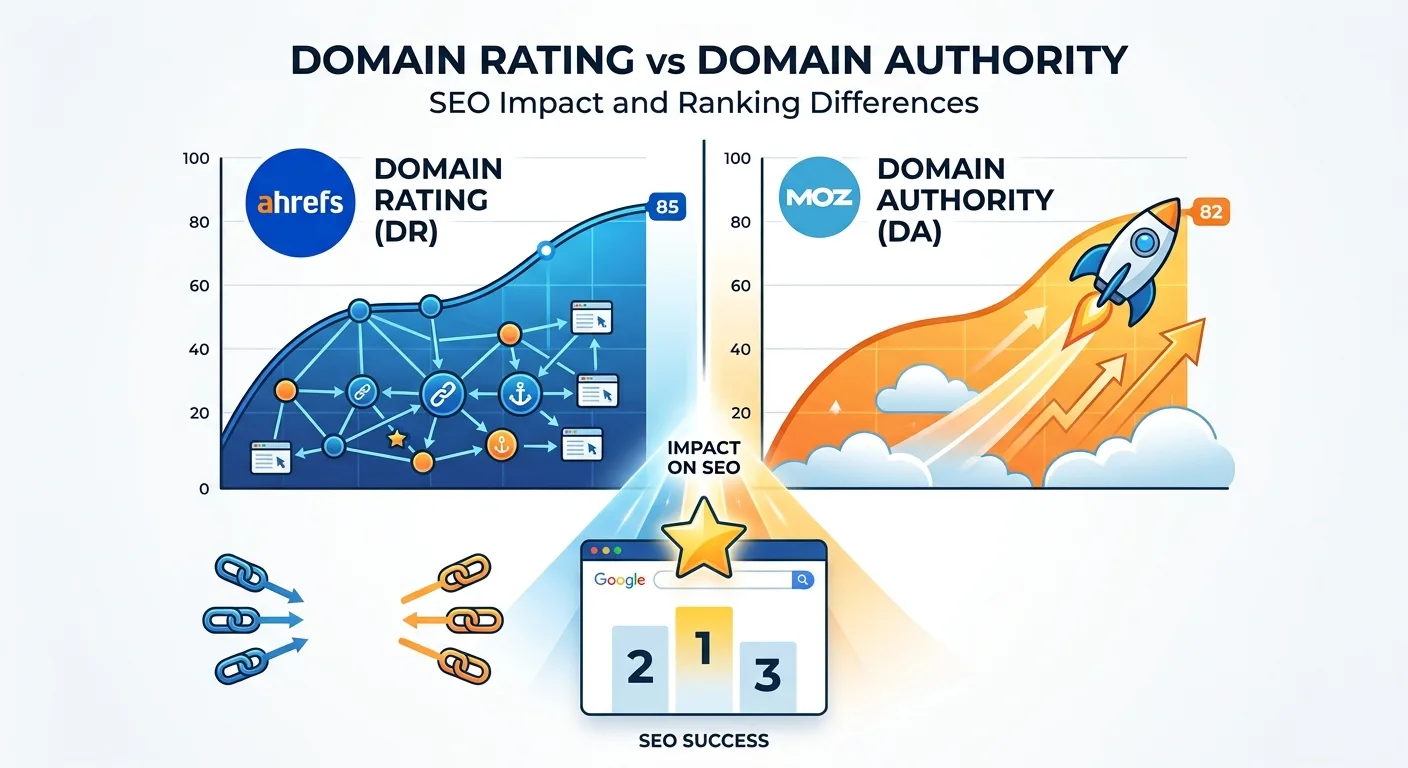
Buy expired domains off one badge and you will overpay. Domain authority and domain rating both get treated like a grade, and both twitch when a link graph changes. They are not the same question. Google does not read either number, so a prettier badge will not make a dead name rank better.
I still look before I bid. The figure is a filter. The history is the price.
Difference Between Domain Authority vs Moz
Moz's domain authority is a search engine ranking score. The score is calculated from the link graph it crawls, then fitted to results the crawler sees. The current model is the neural net from March 2019, retrained a few times a year since. It weighs linking root domains, link quality, anchors, and a spam layer. What comes out is an ability to rank relative to other sites, on a scale from 1 to 100. The official docs, updated March 2025, still say this is not a ranking factor and it does not touch the SERPs. Google repeated the boundary in June 2026: outside tools do not have internal ranking data. A 2024 docs leak did show Google keeps its own site-level signal. That signal is not this metric, and you cannot buy it from a broker.
New hosts start at 1. The curve is logarithmic. Moving 10 to 20 is cheap next to moving 20 to 30, and 60 to 70 is a different sport. If someone sells you "+10 DA" as a fixed pack of links, they are selling a ruler they do not control. When the model retrains, quiet sites shift five to fifteen points while nothing on the link graph moves.
Ahrefs is not in the prediction business. Domain rating measures followed links inside one index. Each linking domain counts once. A strong source that links out to fifty other sites moves you more than a giant source that links out to fifty thousand. Nofollow, sponsored, and UGC do not feed it. Traffic and brand do not feed it either. The number is also relative: other sites can gain links, and your figure slips on a week you did nothing.
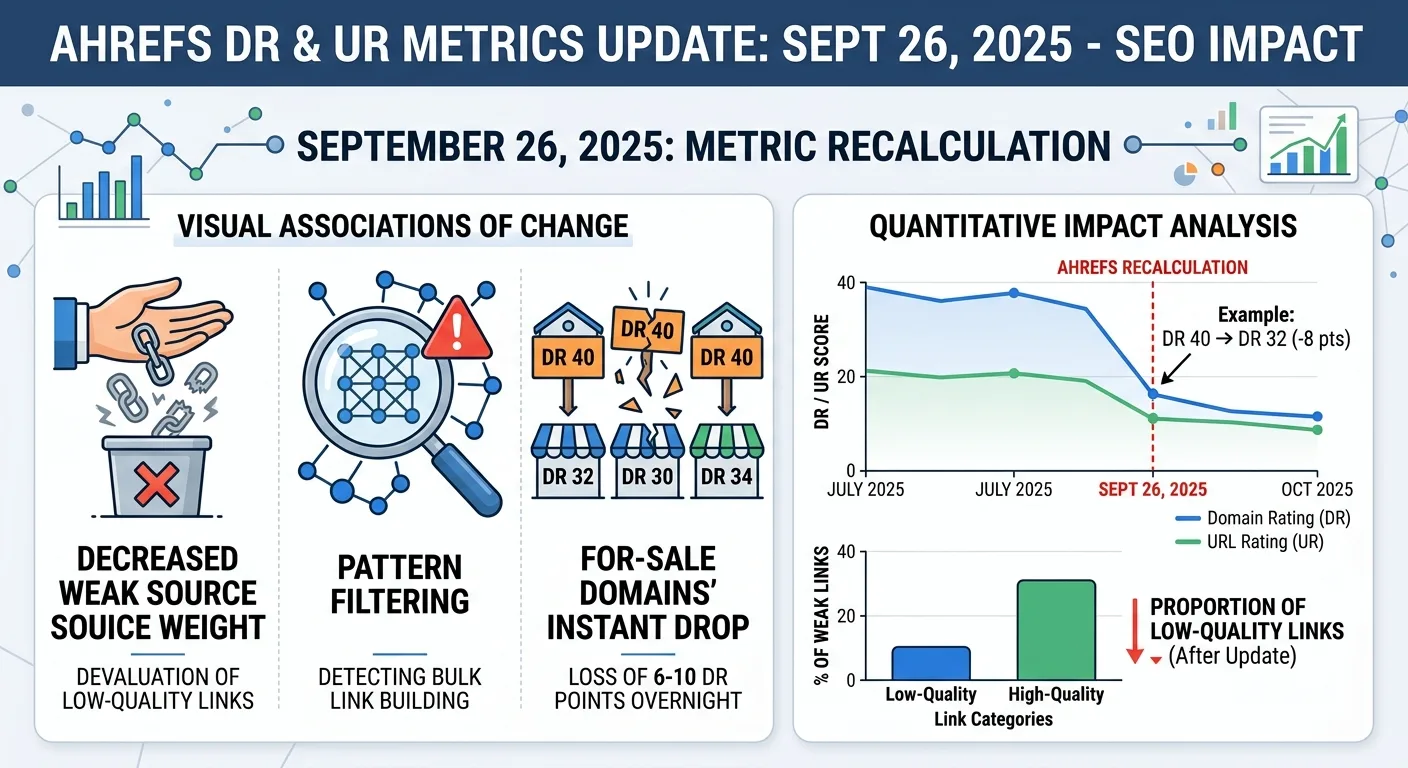
On 26 September 2025 Ahrefs recalculated DR and UR. Weaker sources were down-weighted, and patterns that looked mass-produced were cut. A lot of auction "DR 40" names lost six to ten points overnight without losing a single link. A screenshot from before that date is a retired quote. Names that held their number through the reset are the ones I bother to open.
The split is the whole argument. One score tries to predict. The other describes a link graph. It is not a contest of vendors. Track a name against itself, inside one product, or skip the comparison.
Page Authority, Backlinks, and the Link Metric
Judge the URL, not the whole property. URL Rating is the twin on the other platform. Sellers of expired domain names talk about the host. The links almost never do.
They hit an individual page. An old guide, a homepage, a tool, a category. If most live links land on `/blog/old-guide` and you fold the whole host into a commercial homepage, you throw away the only target those citations had. The badge stays put. The ranking does not.
Backlinks are the reason the file is worth opening, and they are also where the listing lies. A link is worth money only if it is followed, still live, and from a site that does not link out to the whole web. Quality backlinks sit in articles a person wrote. A footer on a fat directory is a thinner slice of the same math DR uses: the source splits what it can pass.
Pull backlinks, then ignore the raw total. Ten blogroll placements from one network are one source. Read the anchors before you read the count. A clean history is dull. Brand, naked URL, a few topical phrases. A burned history is exact-match commercial anchors, one fat month, and foreign spam strings.
Open the backlink profile in Ahrefs, then the same set in Moz. Totals will disagree, because the crawlers do not share a database. The auction line "1,200 backlinks" is a rumor. I check again the week I register. Through redemption and pending delete, owners pull a link that now 404s. You can pay for backlinks that vanish before DNS settles. A normal link profile is uneven. A fake one is tidy, sudden, and off topic.
Ahrefs Domain Rating, DR vs DA, and Authority Score
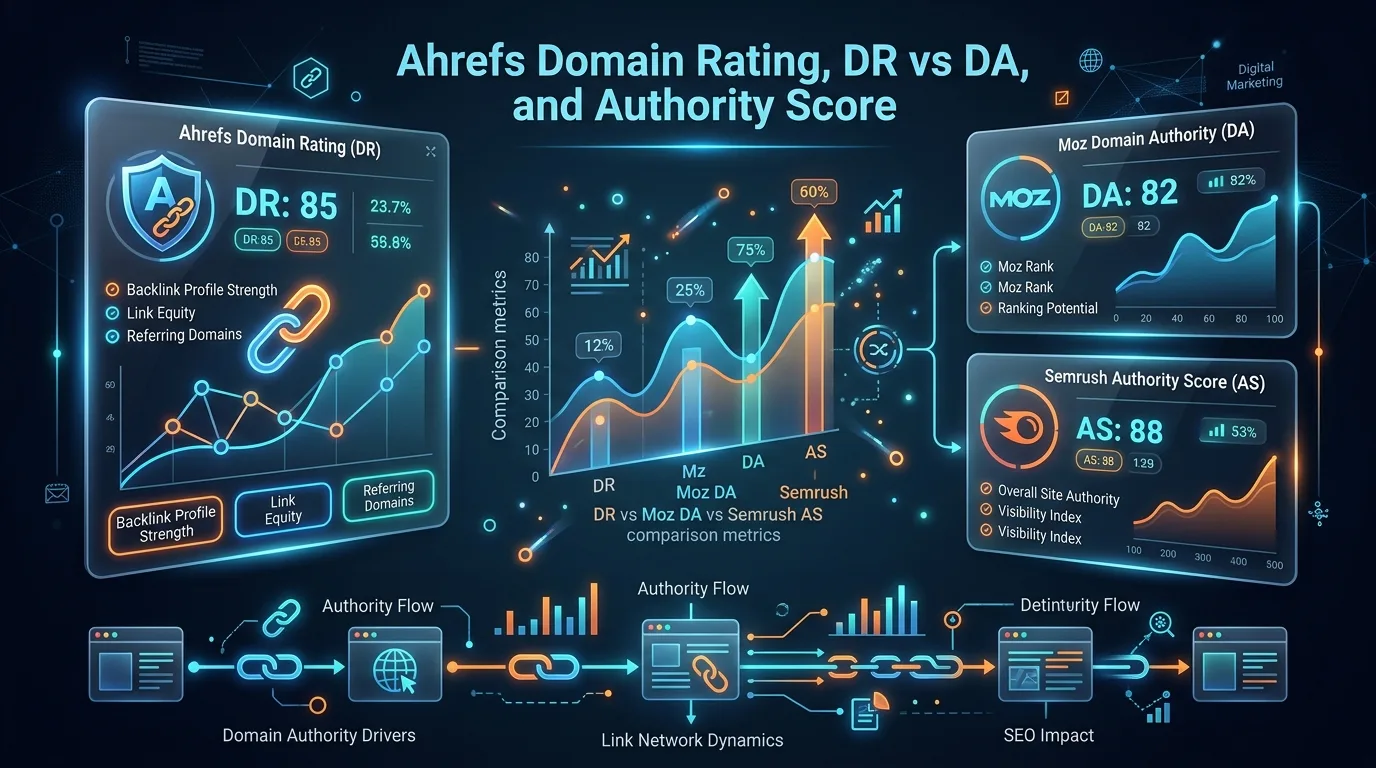
The gap stays small on an ordinary site and gets loud when someone manufactured the graph. A July 2026 cut of 15,357 names, from 29,632 checks, put mean DA at 27.9 and mean DR at 28.6. The median gap was about a point. DR ran at least 20 points above DA on 12.5% of names. Only 2.1% showed DR of 50 or higher with DA under 25.
That last bin is where I close the tab. The link index still counts the edges. The spam-aware model has already cut them. Systems that also watch visits tend to side with the lower figure. High DR, almost no keywords, a crushed DA: you are buying a picture a guest-post broker can resell.
Do not put your DR next to a competitor DA. Same product, or no comparison. Do not put a 2024 export next to a 2026 crawl either. The September 2025 reset moved the board for everyone.
Domain rating also jitters when the rest of the index gets stronger. DA can jump on a retrain while every link sat still. If one metric moves and the other is calm, wait a week before you reprice.
Good Domain Authority Score and High Domain Authority
People hunt that badge as if 40 were a door code. Bands I use when I filter expired domains:
- Under 15: ignore the badge. If the topic is a perfect fit, read the links by hand.
- 15 to 30: normal for a small real site. Most expired domains sit here.
- 30 to 50: do the full audit. Padded names hide in this band too.
- 50 and up: uncommon on a clean independent site. Show visits or I do not believe the file.
That badge is not high authority inside Google. A modest name with thirty relevant sources and a straight archive can beat a louder leftover from a 2021 blast. The last ten points on a log scale are vanity.
Domain Authority Checker and a Website Authority Checker
I open both before I trust a listing, then I confirm them in the source product. For the other number, the free Ahrefs look is enough to start. A public da pa checker, a da checker, a dr checker, or a domain rating checker often prints a cache. I have watched bidders pay on a DR that died in September 2025 and was still glowing in a free widget.
If the tool hides sources, it is not in the buy. I want the graph, the DA figure, and proof that anyone visits. No referring sites, no anchors, no lost links, no bid.
How to check expired domain before buying, in the order that keeps the deposit:
- Wayback. What ran on it, and did the subject stay still?
- A `site:` query. Zero URLs can mean a manual action, or only that the host was offline. The archive timeline separates the two. A real magazine that was dark for three months is not the same as five years of pharma doorways.
- Live sources and anchors. Not the backlink total on the card.
- The figure before and after 26 September 2025. Collapse without lost links means the old strength was padding.
- The two scores side by side. A wide gap is a no.
- Keywords and visits. Fat link counts and an empty keyword list are the tell.
- A trademark search on the string. A lawsuit is more expensive than a bad link.
- Search Console only after you own it. Manual actions are invisible until the property is verified. Spam systems in 2026, including the spam update that finished in early October 2026, also push names down with no message in the console. A clean report is not a promise. Watch queries after you publish.
SEO Strategies to Improve Your Domain With an SEO Tool
Software will not choose the job. You will. Three plays cover almost every SEO buy I see, and only one of them is dull enough to scale.
**White.** Rebuild the old subject. Restore the URLs that carry citations, publish something a person needed, and keep money pages in that same subject. Google's expired-domain abuse rule, added March 2024, targets a name bought mainly to manipulate ranking with thin or unrelated pages. Later spam updates, including October 2026, got sharper at that mismatch. They did not ban a straight rebuild. A fitness archive that becomes a real fitness site is a normal handover. A school name that becomes a casino is the textbook case. Earn a few new mentions slowly. SEO efforts on the URL, intent match, internal links, and a page someone can cite, move ranking more than five extra points on a badge. The authority of a website does not drag a thin URL into contention. Core systems look at the page.
**Gray.** Map redirects URL to URL, and only where the old subject matches the target. One host at a time. A related expired domain with editorial citations can still pass some weight this way. A pile of unrelated redirects onto one affiliate URL mostly dies. Home-insurance citations pointed at a crypto page are not "link juice." They are a mismatch the spam systems already classify. The gray build that still returns is a small site in the original niche: real articles, a handful of contextual placements, no sitewide footer, no sudden spike. You are borrowing a recommendation. Look like the thing that was recommended.
**Black.** Private networks built on drops are not fiction, and the public "ready, cheap, high number" version is mostly burned. What still gets operated is small and slow. One topic. Unique hosts. Unique templates. Old pages restored so the site is not an empty redirect shell. Placements from inner URLs, not a footer on every page. Separate analytics, separate registrar details, no footprint you can grep across the set. Velocity stays low. What fails, and I see this weekly, is shopping a fat DR and redirecting it at a money site in another niche. The DR printout climbs. Ranking does not. If the set is sloppy, the damage hits the money site, not just the node. I will not pay for a metric I can fake with junk placements, and I will not rent my main property to someone else's footprint.
SEO experts who still buy outreach by a single badge are pricing a menu. Use the stack to kill bad inventory. Do not turn the badge into the publishing KPI.
Use Domain Authority and Check Domain Authority
Inside one product, two names, one niche, tracked across months: that is the honest use of that figure. Open the links, then read the number again. Never the other way around. A higher domain authority from a fresh blast is a bill the next owner pays. You did not build a moat. You baked a pattern.
Same rule on the Ahrefs side. A jump right after a batch of easy placements is not a celebration. Wait for the next recrawl, then see which sources survived and which look like a network. If the only change is the badge, the pages did not get stronger.
Domain Authority Score Ranges and Semrush Authority Score
Treat the bands above as a sieve, not a rate card. Semrush is the third vote, and it is the vote that notices empty hype, because it mixes link power, estimated visits, and spam-like patterns. DR 55, DA 20, and a low score on that board means the visits are not there. Rented placements and recycled redirects wear this shape. I want the three figures in one neighborhood, plus keywords the old site actually appeared for. Agreement is the signal. One higher score, from the vendor that ignores traffic, is how a listing gets dressed.
You rank in search engine results when the page fits the query and the citations are about that query. You rank on search engine evidence, not on a rented printout. Clean rebuilds rank higher in search when the old topic and the new page agree. A padded host is not likely to rank because a widget said 40. Nothing in the search results moves on that account.
DA was built to sketch performance across search engine result pages. It is a relative guess. It is not a receipt.
DA Score and the Authority Metric

A high da score with nothing in the index is a souvenir. A quieter file that still appears for its old brand can be the better bid. The metric worth defending in a buy meeting is not one logo. It is the set, plus the archive, plus anchors you would not be ashamed to show a client.
The dr score sits beside DA. If the two are far apart, price the gap, not the prettier column.
Every buy, the rest of the pass:
- Anchors and spikes you can see with your eyes. The spam score inside the DA model refreshes slower than DR, in bands that run roughly 1–30% low, 31–60% medium, and 61–100% high. A new owner can look calm because that layer has not caught up. The anchors will not lie to you the way a delayed percentage will.
- Domain age on a fresh WHOIS record is often a reset. After pending delete, creation date is today. The age of the domain you should trust is the Wayback span, the years the subject stayed coherent.
- Trust Flow against Citation Flow when you have Majestic. Trust close to citation is healthier. Trust 10 against citation 50 is a farm silhouette.
- Index status before you pay. The manual-action report only after you verify. No tool shows you Google's penalty file on a name you do not control.
Higher da on a spreadsheet is not a reason to bid. Build authority on the URL you actually want. The host-level figure can follow. Often it will not, and that is fine.
Website's domain authority is an opinion from one crawler. Website's authority in the wild is the page, the citations, and whether you tried to wear someone else's reputation.
What Gets a Zero Before I Wire the Money
A DR screenshot dated before 26 September 2025 gets a zero. DR at 50 or more with DA under 25 gets a zero, unless visits are real and I can explain the major linking domain. No indexed URLs plus a spam archive gets a zero. Topic match, live editorial citations, a stable history: price the sources you can still click. Let domain rating break a tie between two clean options, and only then.
On expired domains the metric is the invitation. The archive is the deal. Put domain rating and domain authority side by side: one tells you how the followed graph looks, the other tells you what that graph should mean for a ranking. Neither number replaces the anchors, the visits, or the subject the links were actually about.
Comments
Sign in to leave a comment
No comments yet — be the first.